Use this concrete footing calculator to quickly estimate the volume of concrete needed for footings. Calculate accurate footing sizes and material requirements for foundations, posts, and structural supports.
This concrete footing calculator gives you a fast and simple way to calculate how much concrete you need for footings. Just enter the dimensions, choose your unit, and get accurate results for foundations, posts, or construction projects in seconds.
How to Use the Concrete Footing Calculator
Follow these simple steps to get your result:
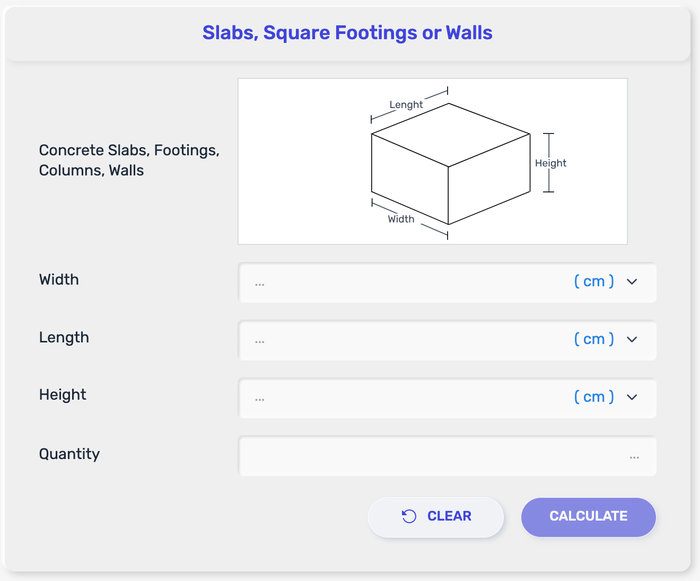
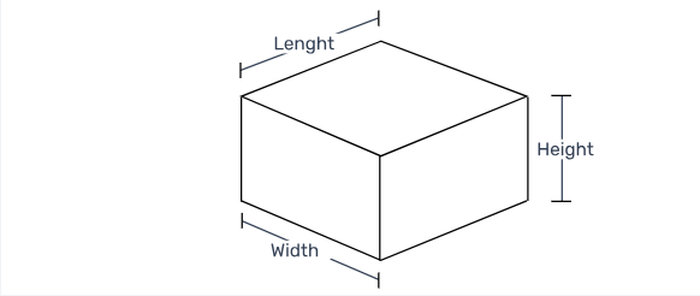
Enter the length, width, and depth of the footing
Choose the unit you want to use (feet, inches, or meters)
Input the number of footings if you have more than one
Click the “Calculate” button
See the total concrete volume instantly
You can change any value and recalculate as many times as needed to compare different footing sizes.
What This Concrete Footing Calculator Can Calculate
This concrete footing calculator can be used for several common footing estimate tasks in one place. It gives you a quick way to check concrete volume before ordering materials or planning a job.
With this tool, you can calculate:
Concrete volume for rectangular footings
Total concrete needed for one footing or multiple footings
Results in common volume units such as cubic feet, cubic meters, or cubic yards
Concrete estimates for foundation footings, deck supports, fence post bases, and similar projects
Material volume for small residential and light construction work
It can also work as a footing calculator concrete users rely on when comparing different footing dimensions. If you need a concrete calculator for footings for more than one base, you can adjust the quantity and get a combined result right away.
For users searching for a concrete footer calculator or footing concrete calculator, this type of tool is useful for quick planning before purchase, delivery, or site preparation.
What the Result Means
The result shows the total volume of concrete required based on the dimensions you entered. This is the amount of concrete needed to fully fill the footing space.
Depending on your selected unit, the result may appear in cubic feet, cubic meters, or cubic yards. This value is commonly used when ordering ready-mix concrete or estimating how many bags of concrete are needed.
You can use this result to:
Estimate how much concrete to order for your project
Plan your material budget more accurately
Avoid ordering too little or too much concrete
Prepare for mixing, transport, or delivery
If you entered multiple footings, the final number represents the total volume for all footings combined, not just a single one.
In short, this number is your practical reference for turning measurements into real construction materials.
Common Use Cases for Concrete Footing Calculations
This concrete footing calculator is often used in everyday construction and home projects where accurate concrete estimates are needed.
Some of the most common situations include:
Pouring footings for house foundations
Installing deck posts and support columns
Setting fence posts securely into the ground
Building bases for sheds, garages, or small structures
Supporting load-bearing beams or structural elements
It’s also useful when comparing different footing sizes before construction begins. Whether you're planning a small backyard project or preparing for a larger build, using a concrete calculator for footings can make the planning process much smoother.
Many users turn to a concrete footings calculator during the early stages of a project to get a quick estimate before final measurements are confirmed.
Standard Footing Sizes for Different Projects
Footing size can change based on the type of structure, the load it carries, and the ground conditions on site. There is no single size that fits every job, but a few common ranges can be used as a practical starting point when planning.
For deck posts, footings are often around 12 to 18 inches wide and 8 to 12 inches deep. These are common for small residential decks, especially when each footing supports a single post.
For fence posts, the size is usually smaller in width but deeper in the ground. A typical footing may be around 8 to 12 inches in diameter and 24 to 36 inches deep, depending on fence height, wind exposure, and soil stability.
For house foundations, footings are generally wider because they carry much heavier structural loads. In many residential projects, they are often around 16 to 24 inches wide and 8 to 12 inches thick, though actual dimensions can vary by design and code requirements.
For column footings, the size depends heavily on the weight above and the soil bearing capacity below. These footings are often larger than standard residential footings and may include reinforcement to support concentrated loads more safely.
These dimensions are only general reference points. Before using a concrete footing calculator for a real project, it is always a good idea to confirm footing requirements with local building codes, project drawings, or a qualified engineer. Soil type, frost depth, drainage conditions, and structural load can all affect the final footing size.
Concrete Volume Formula for Footings
The basic formula for footing volume is:
Volume = Length × Width × Depth
This formula is used for standard rectangular footings. You multiply the three dimensions together to get the total concrete volume.
If you are calculating more than one footing, use:
Total Volume = Length × Width × Depth × Number of Footings
The result is usually shown in cubic units such as cubic feet, cubic meters, or cubic yards, depending on the unit you enter in the calculator.
For ordering ready-mix concrete, the final number is often converted into cubic yards.
Tips for More Accurate Concrete Estimates
Measure each footing carefully before entering dimensions
Double-check length, width, and depth to avoid small errors that affect total volume
Add 5%–10% extra concrete to cover waste, spillage, or uneven ground
Use the same unit for all inputs (feet, inches, or meters) to avoid incorrect results
Check excavation conditions, especially if the base is uneven or wider than planned
Round up your final result when ordering concrete to prevent shortages
Recalculate if you change footing size or quantity during planning
Use a concrete footing calculator early, then adjust based on real site conditions
Estimating Total Project Cost with Concrete and Labor
Before starting a project, it’s useful to look at how real estimates are done in practice. The example below shows how concrete volume, material pricing, and labor are combined into a total cost.
Once you have the volume from your concrete footing calculator, the next step is figuring out how much the project will actually cost. The video above gives a quick walkthrough of how contractors estimate both materials and labor in real projects.
In most cases, your total cost includes three main parts:
Concrete cost: based on price per cubic yard or cubic meter
Extra allowance: usually add 5%–10% to avoid running short
Labor cost: varies depending on size, digging conditions, and setup
A simple way to estimate:
Total cost = (volume × unit price × 1.05–1.1) + labor
Example: If your result is 1.2 cubic yards at $120 per yard:
Adjusted volume = 1.2 × 1.1 = 1.32
Material cost ≈ $158
Add labor if needed
This gives you a quick budget range so you can plan ahead, compare options, or decide whether to handle the job yourself or hire a contractor.
Factors That Affect Footing Concrete Volume
Soil type and load-bearing capacity Soft or loose soil often requires larger and deeper footings, while stable soil may allow smaller dimensions
Structure weight and design Heavier structures need bigger footings to safely transfer loads to the ground
Frost depth requirements In colder regions, footings must extend below the frost line, which increases depth and total concrete volume
Reinforcement needs (rebar spacing) Footings with steel reinforcement may require slightly different dimensions to meet structural standards
Local building regulations Building codes often define minimum footing size, depth, and design requirements for safety
These factors can change the size and depth of your footing, which directly affects how much concrete you need to calculate and order.
References
American Concrete Institute. (2019/2022) – ACI CODE-318-19(22): Building Code Requirements for Structural Concrete https://www.concrete.org/store/productdetail.aspx?ItemID=318U19
American Concrete Institute. (2025) – ACI 318 Building Code Portal https://www.concrete.org/topicsinconcrete/318buildingcodeportal.aspx
International Code Council. (2021) – International Residential Code, Chapter 4: Foundations https://codes.iccsafe.org/content/IRC2021P3/chapter-4-foundations
International Code Council. (2024) – International Residential Code, Chapter 4: Foundations https://codes.iccsafe.org/content/IRC2024P1/chapter-4-foundations
American Cement Association. – Cement & Concrete https://www.cement.org/cement-concrete/
American Cement Association. – Applications of Cement https://www.cement.org/cement-concrete/applications-of-cement/
American Cement Association. – How Cement Is Made https://www.cement.org/cement-concrete/how-cement-is-made/
Portland Cement Association / American Cement Association. (2011) – Design and Control of Concrete Mixtures https://www.cement.org/2011/01/18/design-and-control-of-concrete-mixtures-updated-for-todays-concrete-industry/
FAQ
About us
Strong projects start with solid planning. Concrete-footing-calculator.com was created to help builders, contractors, homeowners, and DIY users estimate footing volume and concrete needs with greater ease and confidence. Whether you're preparing for a foundation job, planning materials, or checking measurements before a pour, this tool is designed to make the process faster and more straightforward.
This tool was developed by the concrete-footing-calculator.com team, with contributions from developers, construction-focused content specialists, and digital tool creators committed to building calculators that support better project planning and smarter decision-making.
Policy
We believe construction tools should be practical, clear, and dependable from the start.
Data and Privacy
concrete-footing-calculator.com tool does not require account registration or personal information. Any measurements or values you enter are used only to generate calculation results and are not stored or shared.
Calculation Accuracy
This tool is designed to provide estimated concrete footing volumes based on the information you enter. While it is built to support accurate planning, actual material needs may vary depending on site conditions, design requirements, local codes, waste allowance, and construction methods.
Intended Use
The calculator is meant for estimating, planning, and general reference. It can help simplify early project preparation, but it should not replace professional judgment, approved building plans, or advice from a qualified contractor or engineer.
Policy Updates
We may update this Policy from time to time to reflect tool improvements or related changes. Any updates will be posted here so the information remains transparent and up to date.